About
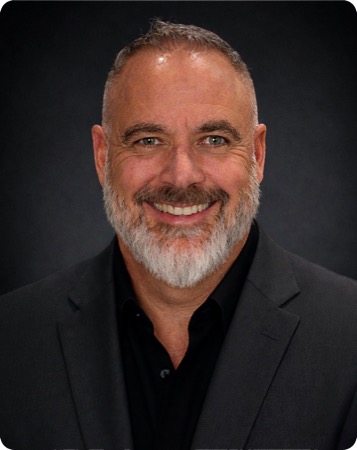
The person behind LINX
LINX was built by an owner who spent twenty-five years running, fixing and rebuilding companies, and who wanted the kind of help that stays until the work holds.





In his own words
I've sat in your chair
I didn't start LINX after reading a book about consulting. I started it after living the problem it solves.
I've owned businesses. I've run them for other people. I've been the owner working seventy-hour weeks wondering why the money wasn't matching the effort, approving invoices at midnight, and telling myself next quarter would be different.
In my own companies, everything ran through me. Not because I wasn't capable. Because I was capable enough to do all of it, so I did all of it, and the business grew right up to the edge of my calendar and stopped.

The story
How LINX ended up doing three things
Two things repeated. The problem was almost never the one the company thought it had.
01
Before LINX
Twenty-five years. More than two thousand owners and executives. I built, grew and turned around companies across a lot of industries, from startups to multi-million dollar operations.
02
LINX starts as advice
LINX started as advice, because advice is what I knew how to sell. It didn't stay there.
03
We start building the thing itself
Owners would agree with the plan and then have nobody free to hand it to. So we started building the thing itself: the CRM, the financial reporting, the written procedures, the weekly meeting that actually decides something.
04
We start providing the hands
Then the same owners ran out of hands, so we started providing them. Bookkeeping, virtual assistants, back-office support, and capital when capital was honestly the constraint.
05
Three things, not one
That is why LINX does three things instead of one. We find what's holding the business back, we install the fix, and when you need hands, we provide the people who do the work.
What we actually do
Three things happen in a LINX engagement
Most firms only do the first one.

Diagnose and Improve
Find the real constraint and set the order things get fixed in.
You see the real problem before you spend money on the wrong one.

Install Infrastructure
Put the tools, the process, and the accountability in the business.
No binder. We install the machinery that runs the business, and your team runs it.

Provide Capacity
Add hands or capital without defaulting to another full-time salary.
When the plan needs hands, we provide them, and capital when that is the real constraint.
Values
What guides how we work
These aren't values on a wall. They're the filters every decision runs through, from who we hire to how we tell a client something they won't enjoy.
Ownership over advice.
Anyone can tell you what to do. We'd rather build it with you and still be there in month three when it is being used for real, by people who didn't sit in the meeting where it was designed.
Honesty over comfort.
We tell you what we see. If the price is wrong, or the person you promoted was never taught the job, you'll hear it early and plainly. That has cost us work. It has never cost us a relationship.
Progress over perfection.
You don't need the perfect plan. You need the next right step, taken this week, with somebody other than you checking whether it held.
People over processes.
A process only works when the people running it understand why it exists. An instruction handed over without its reason can't produce the next decision.
Start the conversation
Now you know who we are. Tell us about you.
First conversation is thirty minutes. We listen first, then tell you honestly whether we can help.